Alderwood Lock & Key SpecialistsService bulletin 3 of 3
Commercial-Grade Lock Replacement: inside the visit
For a business running several locations, this service is often less about one broken lock and more about bringing every door onto a single, manageable key or interchangeable-core system.
Toronto, Ontario · Locksmith · open 24/7
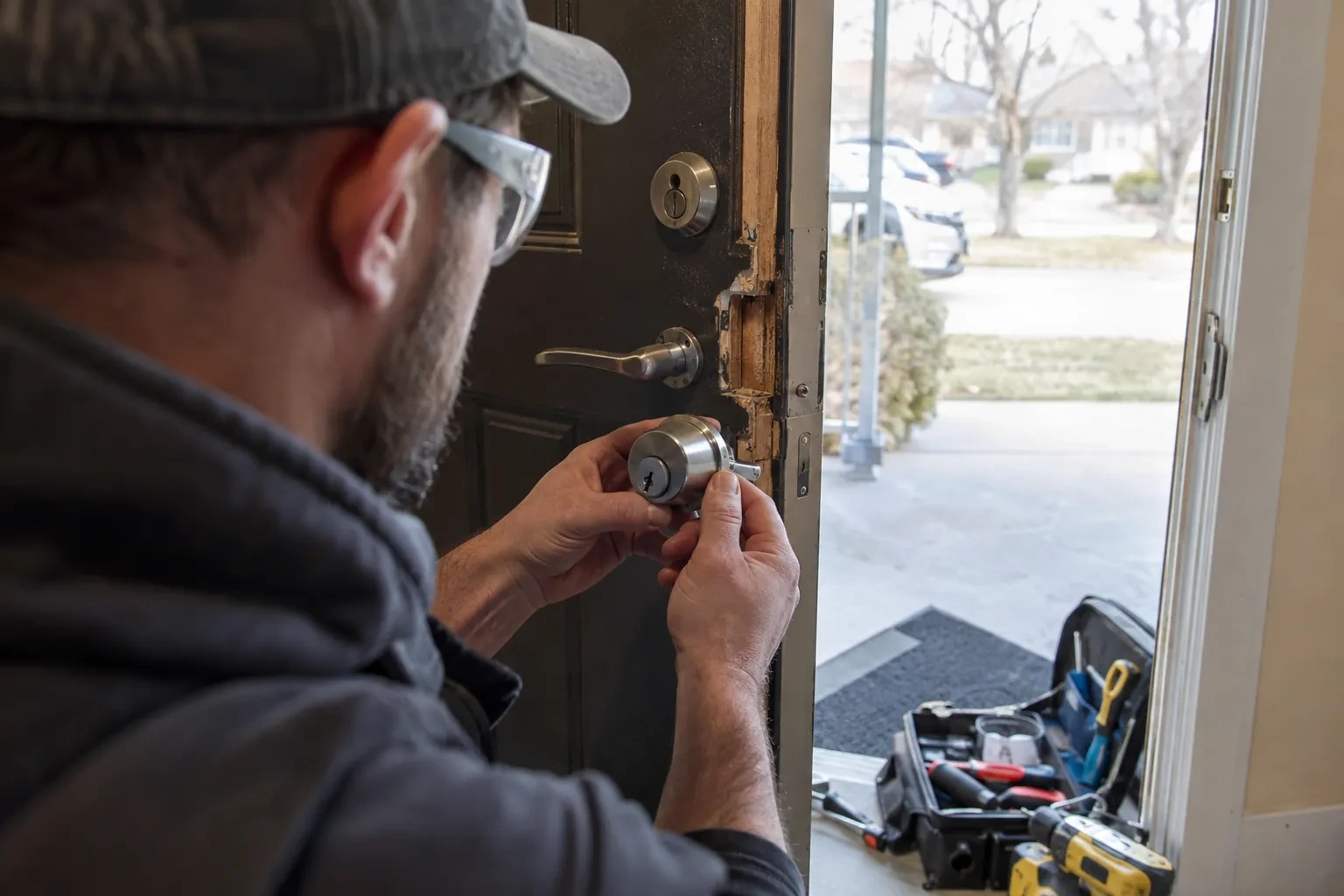
For a business running several locations, this service is often less about one broken lock and more about bringing every door onto a single, manageable key or interchangeable-core system. The locksmith surveys what is currently on each door, works out a keying structure the business can actually administer, from a single master down to individual change keys, and replaces mismatched hardware with cylinders built to accept that structure. Keys are cut and logged against the new system, and any hardware still under a fire or egress rule is checked and matched to that rule at the same time.
Checking how the current lock fits the business's key system
Every commercial building runs some kind of keying logic, even an informal one, and the locksmith maps it before touching hardware: is this cylinder on the same key as other doors, does it belong to a master or grand-master system, is it a standard keyway or a restricted one that only a specific supplier can cut? Getting this picture first means the new hardware can be ordered to slot into that structure, onto a fresh structure the business wants instead, or left standing alone if that is genuinely what is wanted.
Selecting hardware built for this opening
With the assessment complete, the locksmith orders hardware to match: a mortise lock body for a mortise-prepped door, a heavy cylindrical lockset for a standard bored door, or a narrow-stile lock or hookbolt for an aluminum storefront. Where the door is part of a fire separation or a required exit, the hardware chosen is listed for that rating and function rather than a general-purpose substitute. Grade and finish are matched to the traffic the door takes, so a heavily used delivery door gets hardware built for that duty rather than the lightest option available.
A storefront that closes the way it should
For a narrow-stile or glass storefront door, the finished job means the hookbolt or deadlatch engages fully across its travel every time, without the shoulder-check that a worn or mismatched lock used to need. Staff closing up for the night can throw the lock once and trust it caught, and the business is no longer relying on a habit of double-checking a door that should simply work. The hardware's finish is also suited to public-facing use, holding its appearance under daily handling.