Emergency Lockouts · Toronto
Seized & Jammed Lock Opening
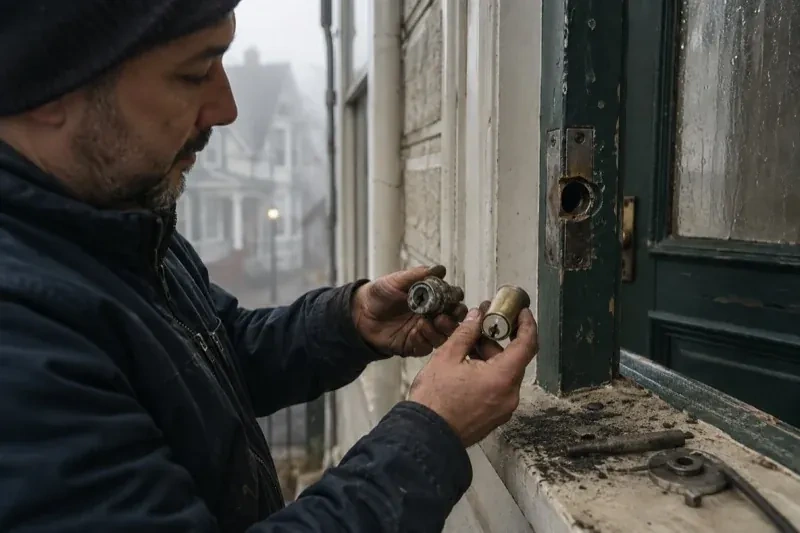
The old mortise lock on the front door of the house turns the key halfway and stops with a dull clunk. It has been getting harder for months, and the brass key is starting to show a bend.
Call now · open 24/7(289) 805-5275In plain words
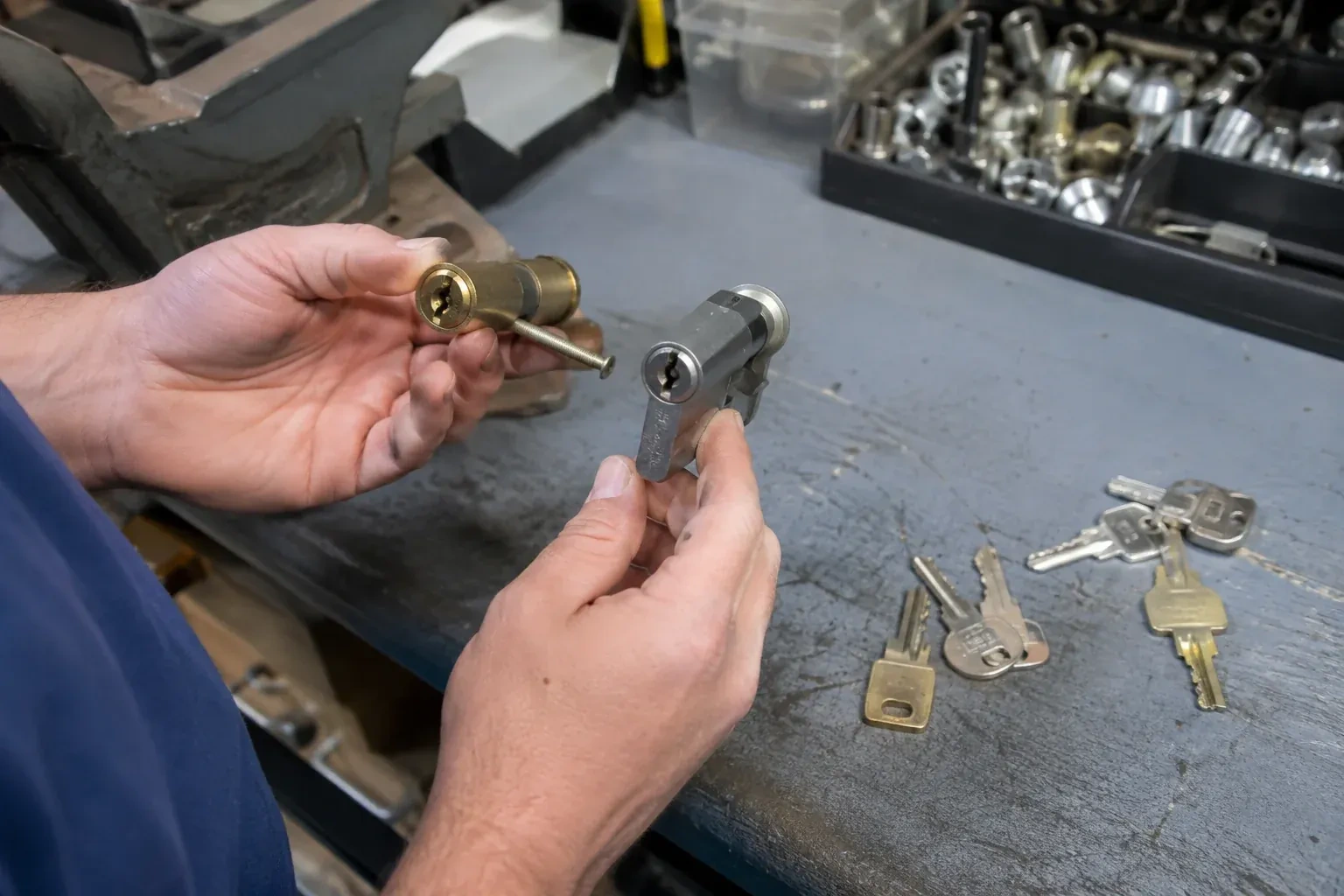
When the cylinder is the part that has seized, the work is about cleaning rather than force. Keyways collect dust, salt spray, metal filings and residue from sprays never meant for locks, and over time the pins stop lifting cleanly. The locksmith flushes the plug with a contact cleaner, applies a penetrating lubricant, and works the key in small movements until the plug turns. With the door open the cylinder comes out, is stripped and cleaned, gets fresh springs or pins where worn, and is dressed with the lubricant specified for that cylinder. A plug or shell that is worn, damaged or eaten through by corrosion is what gets replaced.
How the visit goesThe key turns a full circle without any resistance and the deadbolt stays exactly where it is. There is no click, nothing moves behind the face of the lock, and the door is as closed as it was before you touched it.
Seized & Jammed Lock Opening · Toronto
How the visit goes
- 1
Loading the door while the key is worked
With the lock family narrowed, the locksmith puts a hand on the door. Pushing it into the frame, pulling it out, and lifting on the handle each change how a bound bolt sits in its pocket, and the key is tried gently in each position. If the key frees up under one of those loads, the door is the cause. Where a second entrance is open, the same lock family is compared with the door swung wide, since a bolt that throws smoothly in mid-air and binds when closed has been pinched by the frame. Nothing is forced during this test; it is a diagnosis, not an attempt.
- 2
Taking the load off a bound bolt
When the door is the cause, the opening is a matter of leverage rather than tools. The locksmith lifts, pushes or pulls the door to bring the bolt back into line with its pocket while the key turns, and the bolt slides home. With the door open, the reason is dealt with: hinge screws tightened or replaced with longer ones that reach the framing, a hinge shimmed to raise a dropped door, the strike plate moved or its edge dressed with a file, the bolt pocket deepened with a sharp chisel, or a weatherstrip trimmed. The lock is then thrown and retracted with the door closed until it moves without any pressure on the door.
- 3
A lock that turns with two fingers
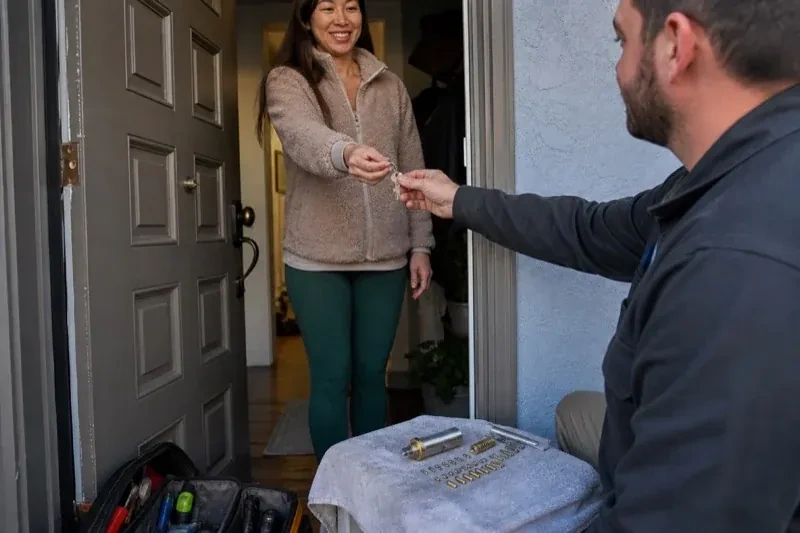
You leave with a lock that operates the way it did when it was new: the key seats fully, the plug turns without a wiggle, the bolt throws and retracts through its whole travel, and the door closes and locks without a shoulder. The locksmith has cycled it from both sides and with every key, and has shown you where the trouble was, whether that was a gritty keyway, a broken tailpiece or a strike plate a few millimetres out. If you had a habit of lifting the door or pulling it toward you to lock it, that habit is now retired.
In the van
- Penetrating lubricant
- Replacement cylinder
- Electronic contact cleaner
- Dry PTFE or graphite lock lubricant
- Strike plate and hinge shims
What affects the quote
- 1
Which part is jammed
A bolt pinned by the door, a cylinder clogged with grit and a broken tailpiece are three different jobs with three different amounts of work, and the quote follows the diagnosis rather than the symptom.
- 2
Mortise and commercial hardware
Drawing a mortise case, replacing a hub or spring and regreasing the contact points is more involved than a cylinder service, and storefront and exit hardware are quoted accordingly.
- 3
Small parts behind the cylinder
Tailpieces, cams, springs, cylinder caps and pins are minor items, but each one used is named on the quote so you can see what went into the lock.
Same fees day, night or weekend.
Seized & Jammed Lock Opening: questions
The thumb-turn is stuck from inside and we need that door to get out. What should we do?
Use another exit for now and call. From the inside the fault is usually a bolt pinned by the frame or a bent spindle, both of which the locksmith frees without damage. A main exit door should open from inside without a key or special knowledge, so the repair leaves the door doing exactly that, and if the hardware on it was the wrong type for an exit, a thumb-turn deadbolt is suggested.
Could a jammed lock mean someone tampered with it?
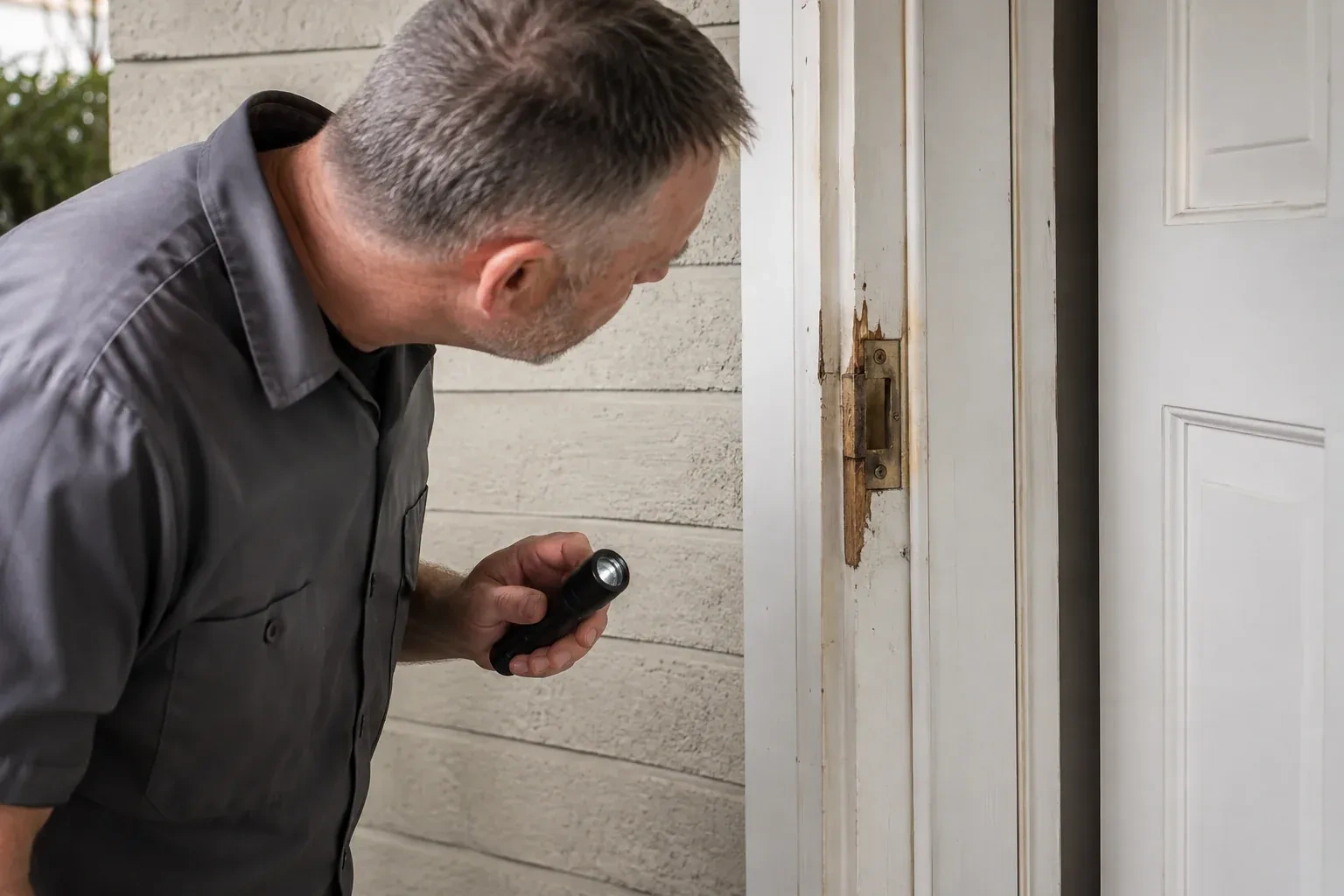
Occasionally, but wear and weather are far more common. Signs that point to tampering are fresh scratches around the keyway, a plug that sits crooked, or debris such as glue or a broken tool tip inside, none of which appear from ordinary use. The locksmith looks for these during the inspection and says plainly what was found. If the cylinder has been damaged that way, it is replaced and, if you wish, the other doors are rekeyed.
Should I spray something into the keyway while I wait?
Better not, unless it is a proper dry lock lubricant. Household oils, general penetrating sprays and hinge silicone thicken inside the cylinder and attract grit, so they buy a day and cost a service later. If the lock is frozen, a lock de-icer is fine; boiling water is not, since it refreezes deeper in. The most useful thing to do while waiting is to stop turning the key, so it does not bend or snap.
Lockout Services
 EmergencyHome Lockout ServiceThe keypad on the smart lock blinks once and goes dark.
 EmergencyBusiness Lockout ServiceIt is ten to nine, three staff are on the sidewalk with their coffees, and the key that has opened the glass front door for six…
 EmergencyBroken Key ExtractionThe padlock on the shed has been stiff all summer.
 EmergencyBreak-In Damage Lock RepairThey did not get in.
 EmergencyLost Keys — Same-Visit RekeyThe lawyer's envelope held two keys for the new house.
Seized & Jammed Lock Opening near you
Toronto, Ontario
Toronto information
- Town
- Toronto, Ontario
- In business
- 20 years
- Hours
- Open 24/7 · nights, weekends and holidays, same fees
- Phone
- (289) 805-5275
- Visits
- On-site assessment preferred. Request a visit or call.
What the census means at the door
58%
Older homes. About 58% of homes in Toronto were built in 1980 or earlier, according to the 2021 Census.
In neighbourhoods of established homes, keys have often been copied many times over many owners. Rekeying every exterior door to one fresh key is the common first job, and it works on old cylinders just as well as on new ones.
23%
Single-detached houses make up about 23% of homes in Toronto (2021 Census).
Where most homes are apartments or condos, storage lockers, bike rooms and parking gates carry their own locks. A locksmith can supply and key padlocks and cam locks for those spaces so one household ring covers everything it uses.
Open 24/7
Request a visit
The old mortise lock on the front door of the house turns the key halfway and stops with a dull clunk.
Call now · open 24/7(289) 805-5275- On-site assessment preferred
- Same fees day, night or weekend
- 20 years in business