Emergency Car keys · Toronto
Car Key Replacement
You bought the car privately and it came with a single key on a shoelace. Every time it leaves your hand you notice, and you would like a second one made before the first goes missing.
Call now · open 24/7(289) 805-5275In plain words
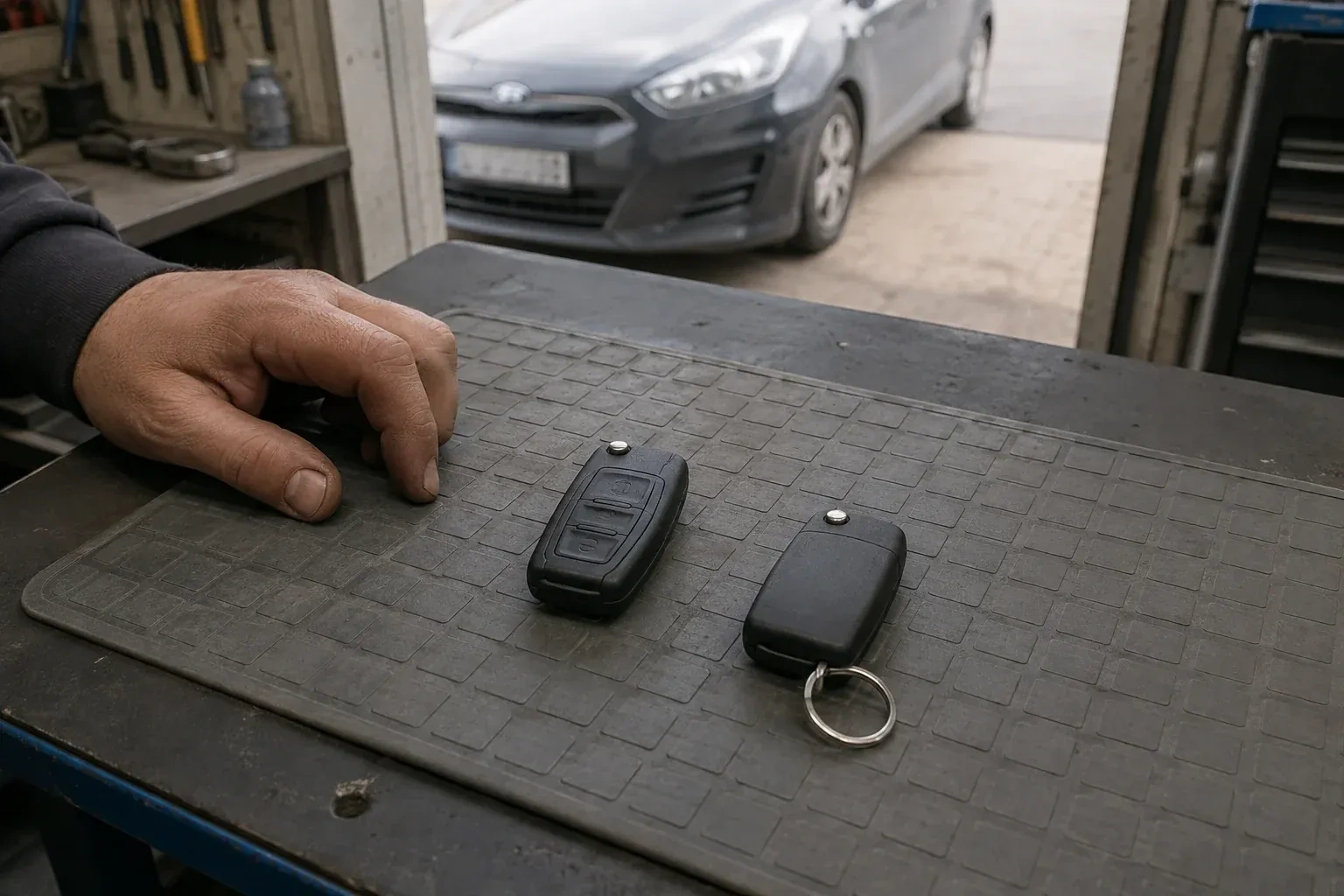
It helps to think of a car key as several parts sharing one case. The metal blade is the mechanical part; it opens the doors and, on older cars, turns the ignition. The transponder is a small chip with no battery that answers the immobilizer when the key is near the ignition; without the right answer the engine refuses to run. The remote is a separate radio circuit with its own battery that works the lock, unlock, trunk and panic buttons. A proximity fob adds hands-free entry and push-button start. Replacement can involve any or all of these, and a good visit begins by working out which ones you need.
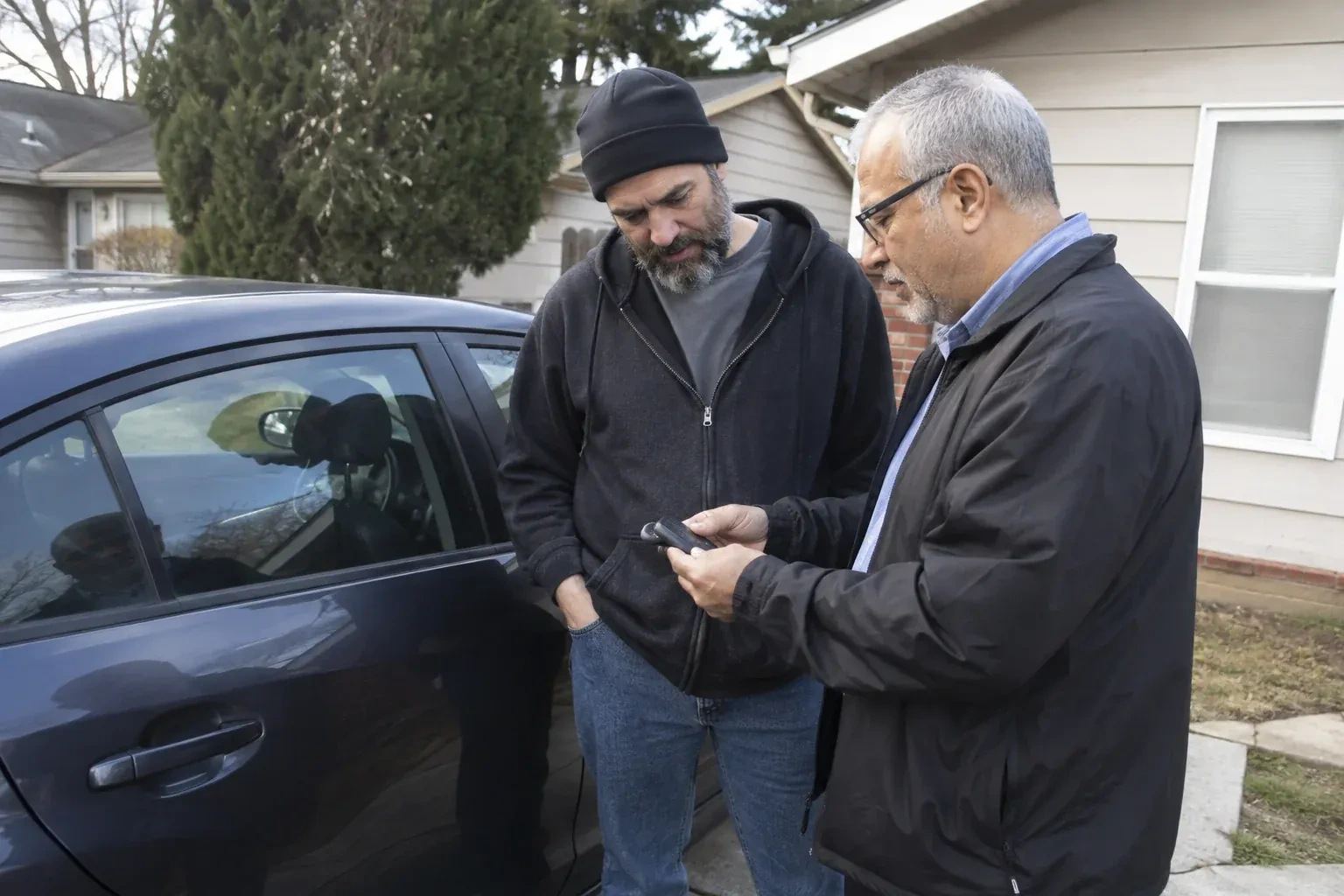
How the visit goesMinus twenty outside, the fob button does nothing, and the door keyhole has a crust of road salt over it because you have not used a metal key in that car since the day you bought it.
Car Key Replacement · Toronto
How the visit goes
- 1
The locks and ignition, not only the key
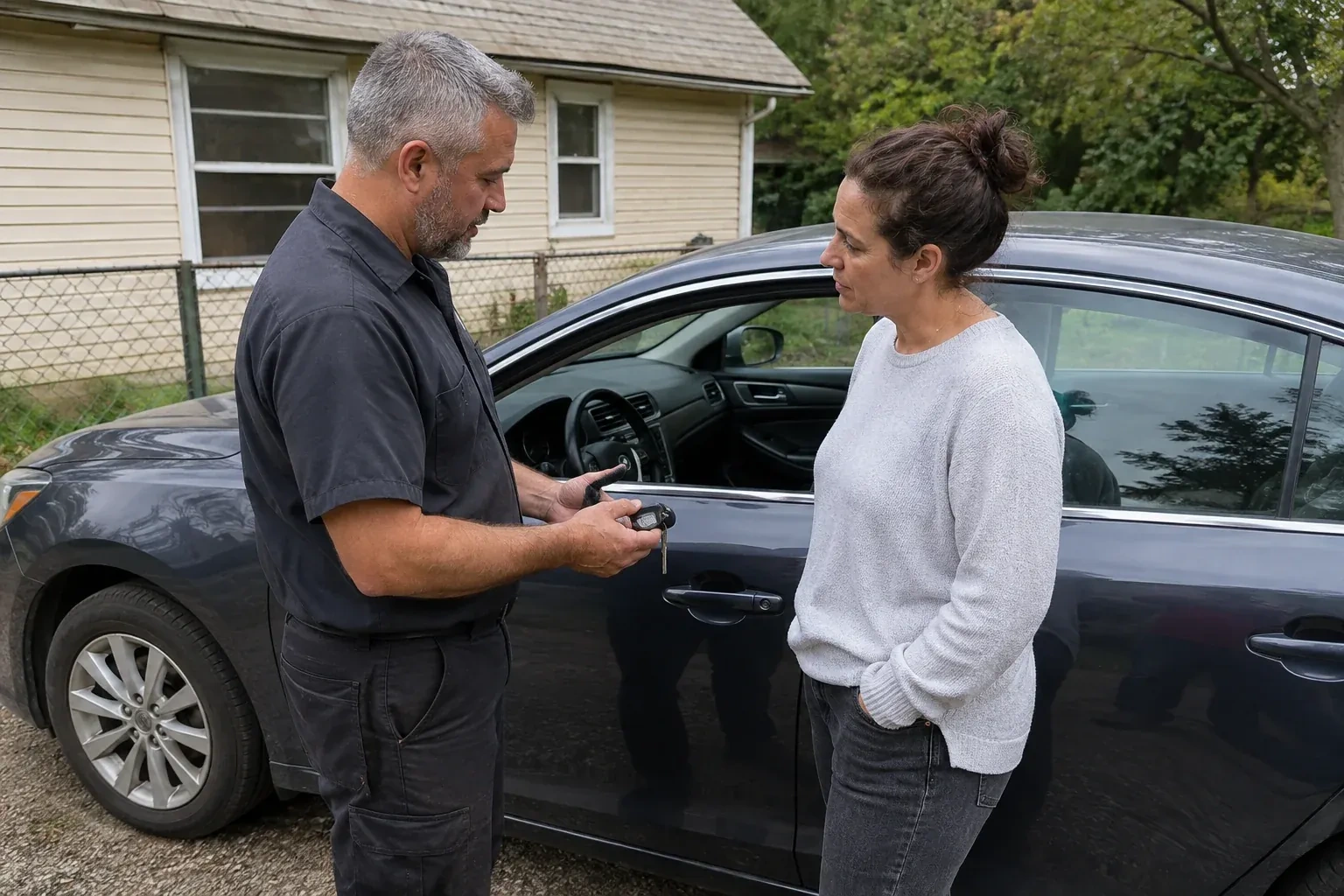
A new key is only as good as the cylinders it turns, so the check looks at the car too. A door lock that has gone unused for years on a keyless vehicle can be stiff with salt and grit; an ignition that needed a jiggle with the old key has worn wafers that will feel tight with a fresh blade; a previous replacement may have left the doors and ignition on different cuts. Aftermarket alarms and remote starters can also sit between the key and the immobilizer. Spotting these early lets the locksmith bring the right parts and explain what else the car may need so the new key feels right.
- 2
Programming the transponder through the diagnostic port
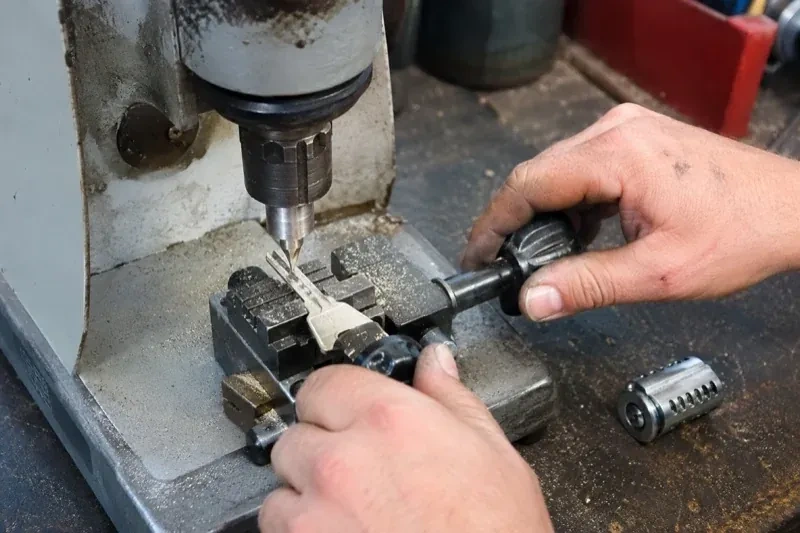
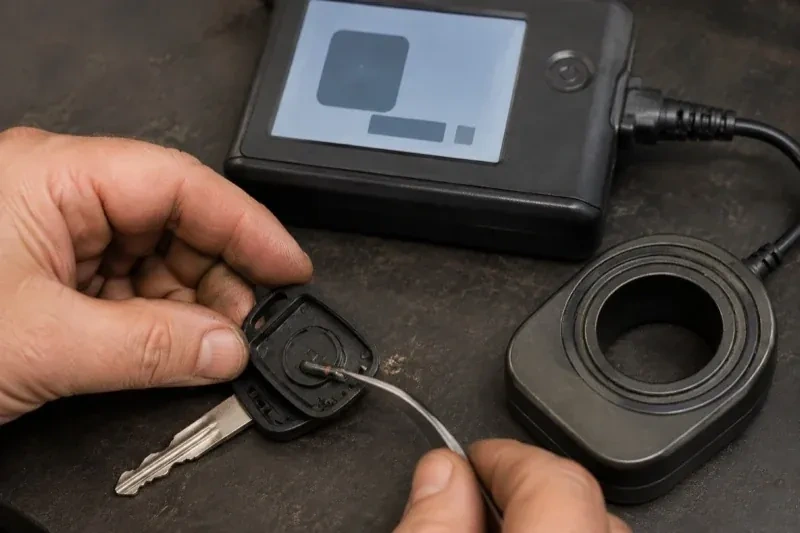
With the blade cut, the electronic half of the job begins. On a vehicle with OBD-programmable keys, the locksmith connects a programming tool to the diagnostic port under the dash, selects the exact vehicle and immobilizer system, and starts a session that introduces the new transponder to the car. Some systems accept the key in moments; others enforce a security wait timer, or ask for a PIN that the tool reads from the vehicle or that is obtained through the manufacturer's secure-data route. The key is cycled in the ignition or held to the start button when prompted, and the tool confirms the number of keys the car now recognizes.
- 3
Ownership paperwork kept in order
The visit closes with your documents back in your hands and a copy of the authorization record kept by the locksmith, which is the industry's way of tying every key made to a named owner and a VIN. It is a good moment to check that the vehicle permit is current and in your name, especially after a private purchase, since the ownership transfer is what makes future key service straightforward. Keep the permit in your wallet or with your licence rather than in the glovebox next to a spare key, so a break-in gives nobody both the car's identity and a way to drive it.
In the van
- Transponder key blank
- Transponder chip
- OBD programming tool
- Fob coin-cell battery
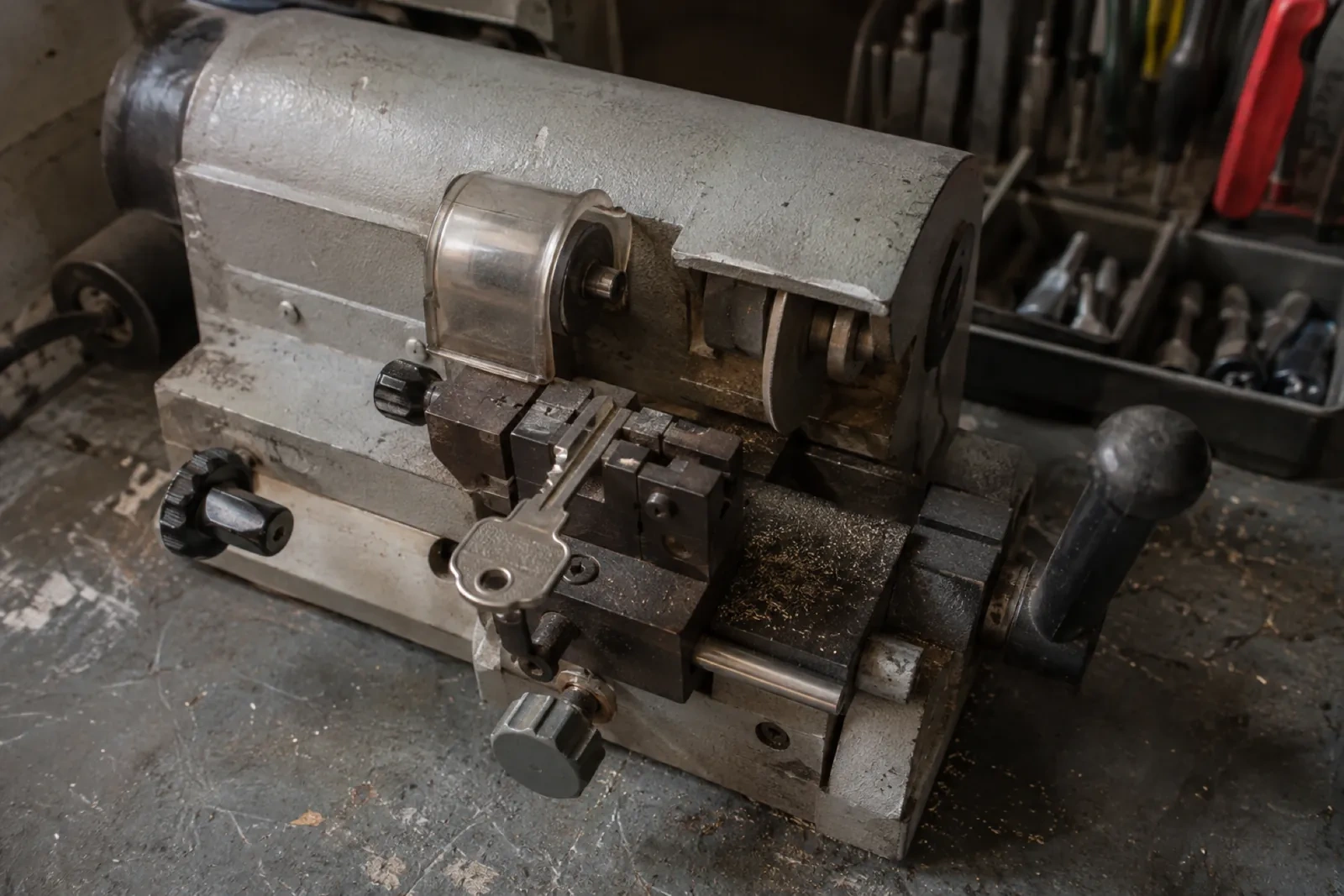
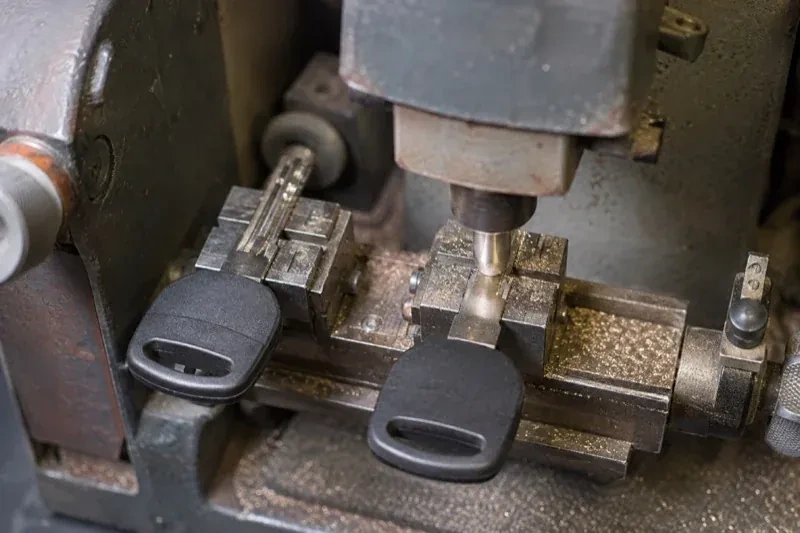
- Laser-style milling cutter
What affects the quote
- 1
Original or aftermarket part
A manufacturer fob and a good aftermarket equivalent both do the job on many models, at different part costs. The locksmith says which is proposed for your car and why, and the quote names the part.
- 2
Transponder, remote or proximity
A key with only a chip, a remote-head key with buttons and a full proximity fob are three tiers of hardware and three programming procedures. The quote names which one your car uses.
- 3
Year, make and model
The vehicle decides the blank, the chip and the programming route. A twenty-year-old sedan with a plain transponder key and a recent proximity-start model are different jobs, and the quote follows the VIN rather than a flat figure.
Same fees day, night or weekend.
Car Key Replacement: questions
How many keys should a car have?
Two working keys is the sensible minimum, and it is what most vehicles left the factory with. One lives on your ring; the other lives somewhere safe away from the car. With two, any future key work is an add-a-key job rather than a reset from nothing. Households that share a vehicle, or owners with a remote starter on one fob and a plain key for the valet, sometimes prefer three.
What is the small metal blade inside my smart key for?
It is the emergency key. When the fob's battery is flat, or the car's own battery has died and the doors ignore the buttons, the blade unlocks the driver's door mechanically. A small release on the fob lets it slide out. On a replacement fob the locksmith cuts this blade to your door lock and shows you where the keyhole is, since on some cars it hides under a cap on the handle.
The key snapped off inside the lock. What happens now?
The broken piece is drawn out with an extractor that grips it rather than pushing it deeper, and the cylinder is checked for damage. The head of the key, if it survived, still holds the chip and the remote, so it can be rebuilt around a new blade in a new case without any programming. If the whole key was lost with the break, a fresh transponder key is cut to code and programmed as usual.
Car Keys
Bigger photo, sooner job: Emergency Book soon Plan ahead
Car Key Replacement near you
Toronto, Ontario
Toronto information
- Town
- Toronto, Ontario
- In business
- 20 years
- Hours
- Open 24/7 · nights, weekends and holidays, same fees
- Phone
- (289) 805-5275
- Visits
- On-site assessment preferred. Request a visit or call.
What the census means at the door
58%
Older homes. About 58% of homes in Toronto were built in 1980 or earlier, according to the 2021 Census.
In neighbourhoods of established homes, keys have often been copied many times over many owners. Rekeying every exterior door to one fresh key is the common first job, and it works on old cylinders just as well as on new ones.
23%
Single-detached houses make up about 23% of homes in Toronto (2021 Census).
Where most homes are apartments or condos, storage lockers, bike rooms and parking gates carry their own locks. A locksmith can supply and key padlocks and cam locks for those spaces so one household ring covers everything it uses.
Open 24/7
Request a visit
You bought the car privately and it came with a single key on a shoelace.
Call now · open 24/7(289) 805-5275- On-site assessment preferred
- Same fees day, night or weekend
- 20 years in business